

Western honey bee
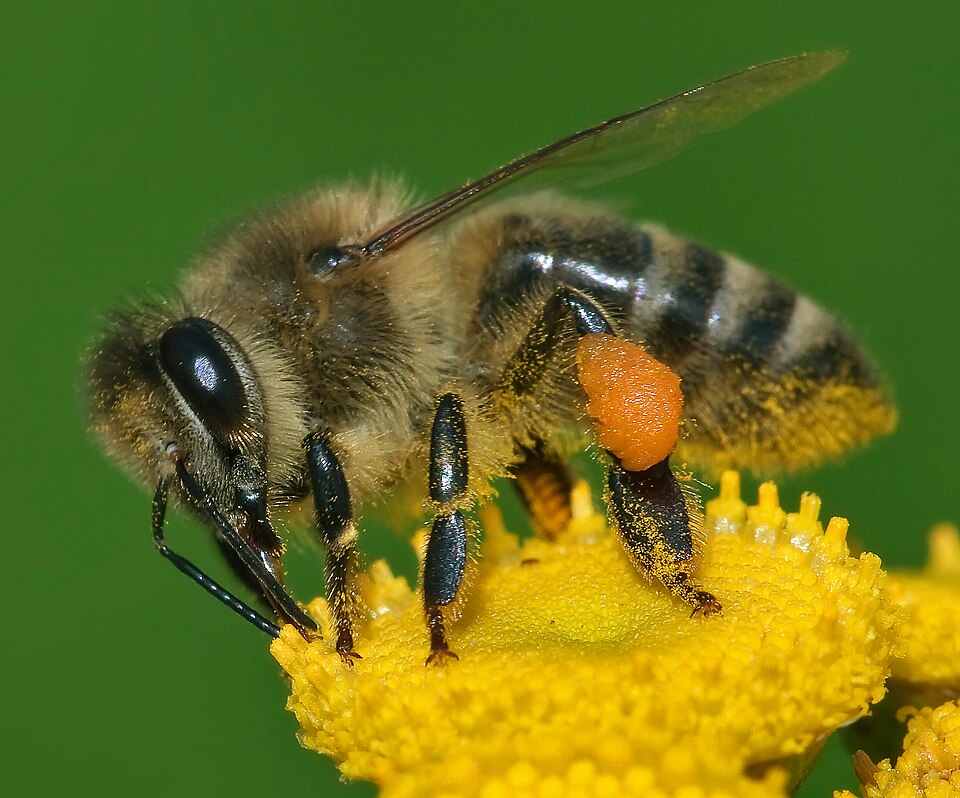
The western honey bee is the bee that makes the honey we eat. It lives in a huge family with one queen, lots of worker bees and some drones. Together they work like one big team.
How fast is it?
Fun facts
A healthy hive in summer can hold 40,000 to 80,000 bees.
Bees tell each other where to find flowers by doing a wiggly dance called the waggle dance.
In spring, the old queen leaves with about two thirds of the workers to start a new home. This is called swarming.
It was one of the first insects that people kept, both for honey and to help plants make fruit.
Honey can be kept almost forever because the bees dry it until mould cannot grow in it.
Most asked questions about Western honey bee
?How do bees make honey?
Worker bees collect nectar from flowers and dry it out inside the hive until it turns into thick honey.
?How many bees live in a hive?
In summer a strong hive can have 40,000 to 80,000 bees.
For bug experts
- Scientific name
- Apis mellifera
- Group
- Bees and bumblebees
- Family
- Apidae
- Classification
- Insecta > Hymenoptera > Apidae
- Lives on
- Africa, Asia, Europe, North America, South America, Australia and Oceania
Where the facts come from
- Western honey bee (Wikipedia, CC BY-SA 4.0): what it looks like, where it lives, what it eats, sizes and fun facts, retold in simple words.
- Picture by Andreas Trepte. CC BY-SA 2.5, Wikimedia Commons. The round sticker of this bug is cut from the same picture.
If we got something wrong, sorry, we are bug fans, not a science journal. Tell us at [email protected] and we will fix it.
 Buff-tailed bumblebee
 Violet carpenter bee
 Giant honey bee
 Wallace's giant bee
 Himalayan giant honey bee
 Eastern honey bee
 Twenty-two-spot ladybird
 Twice-stabbed ladybird
 Eastern leaf-footed bug
 Common green lacewing
 Hornet moth
 Cloudless sulphur