

Franklin's bumblebee
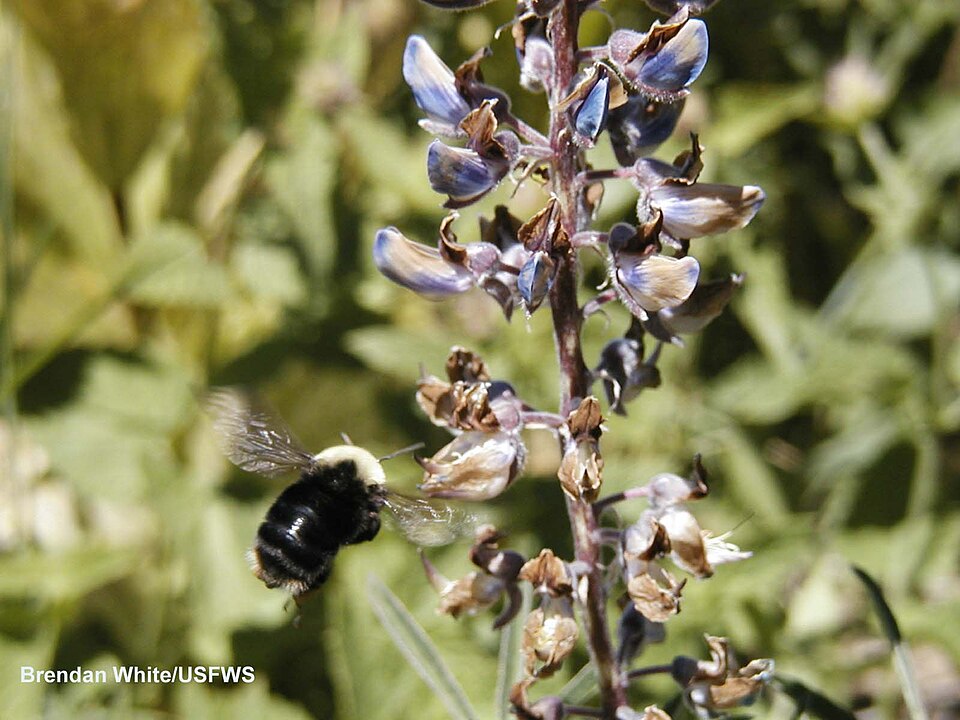
Franklin's bumblebee is a fuzzy bumblebee with an all-black tail end and a yellow U shape on its back. It lives in one tiny corner of the USA, smaller than any other bumblebee's home. It is so rare that nobody has seen one since 2006.
How fast is it?
Fun facts
Its whole home is only about 310 by 110 kilometres, between two mountain ranges.
The last time anyone saw one was in 2006, in Oregon.
Some experts think it may already have died out, but people are still searching for it.
In 2019 California made it a protected animal.
Most asked questions about Franklin's bumblebee
?Is Franklin's bumblebee extinct?
Nobody knows for sure. It has not been seen since 2006, but it is still listed as critically endangered.
?Where does Franklin's bumblebee live?
Only in a small area of southern Oregon and northern California in the USA.
?What does Franklin's bumblebee eat?
Nectar and pollen from wildflowers like lupines and California poppies.
For bug experts
- Scientific name
- Bombus franklini
- Group
- Bees and bumblebees
- Family
- Apidae
- Classification
- Insecta > Hymenoptera > Apidae
- Lives on
- North America
Where the facts come from
- Franklin's bumblebee (Wikipedia, CC BY-SA 4.0): what it looks like, where it lives, what it eats, sizes and fun facts, retold in simple words.
- Picture by USFWS Pacific. Public domain, Wikimedia Commons. The round sticker of this bug is cut from the same picture.
If we got something wrong, sorry, we are bug fans, not a science journal. Tell us at [email protected] and we will fix it.
 Western honey bee
 Buff-tailed bumblebee
 Violet carpenter bee
 Giant honey bee
 Wallace's giant bee
 Himalayan giant honey bee
 Green shield bug
 Oleander hawk-moth
 White-marked tussock moth
 Northern black widow
 Golden tortoise beetle
 Meat ant
.jpg)