

Bug card No. 0363 of 1,500
Costa Rican zebra tarantula
Aphonopelma seemanni
Eats: Other bugs and small animalsSpidersDeserts and dry places8 legsNot an insect, but a bug cousin
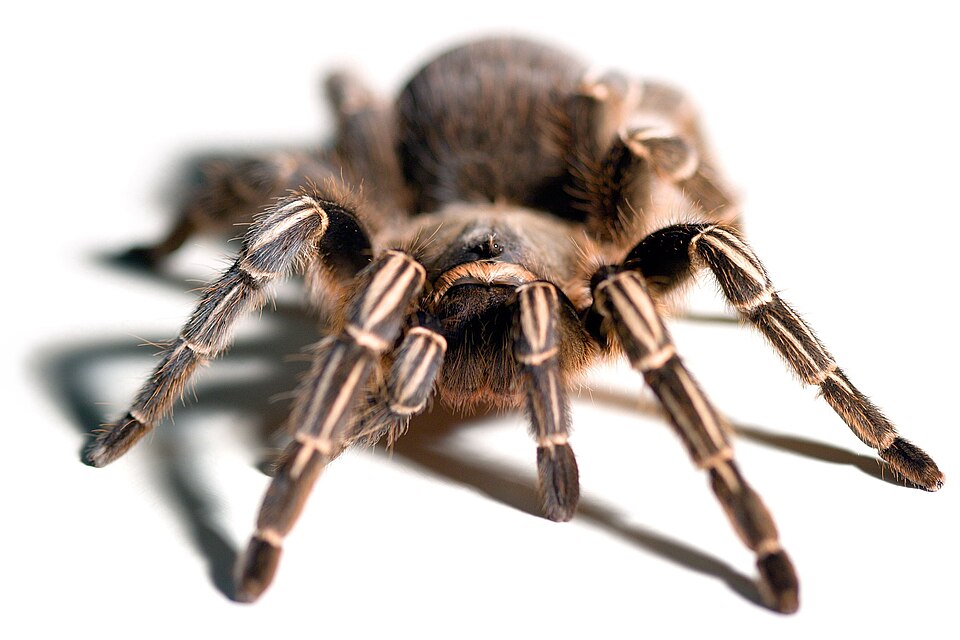
The Costa Rican zebra tarantula is a big, hairy black spider with white stripes at its knees, like a zebra. It lives in deep burrows in dry scrubland in Central America. It is shy and runs away very fast.
Fun fact: spiders are not insects. Insects have six legs, spiders have eight. Everyone calls them bugs anyway!
Lives in
Central America: Costa Rica, Nicaragua, Honduras and maybe Guatemala, in dry scrubland
What does it eat?
It eats insects like grasshoppers and cockroaches. Pet tarantulas are fed crickets.
How fast is it?
A tortoise about 0.3 km/h (0.19 mph)
Costa Rican zebra tarantula about 1.5 km/h (0.93 mph)
A person walking about 5 km/h (3.1 mph)
A kid running fast about 13 km/h (8.1 mph)
cool stuff
Fun facts
1
With its legs spread out it measures about 10 to 13 centimetres.
2
A female can live up to 20 years. Males live only up to about five years.
3
Its deep burrow stays cool on hot days and warm on cold nights.
4
Lots of them often live close together in the same area.
5
Some are brown instead of black.
you asked
Most asked questions about Costa Rican zebra tarantula
?How long does a zebra tarantula live?
Females can live up to 20 years, males up to about five.
?What does a zebra tarantula eat?
Insects such as grasshoppers, cockroaches and crickets.
For bug experts
- Scientific name
- Aphonopelma seemanni
- Group
- Spiders
- Family
- Theraphosidae
- Classification
- Arachnida > Araneae > Theraphosidae
- Lives on
- North America
- Also known as
- Striped-knee tarantula
Where the facts come from
- Aphonopelma seemanni (Wikipedia, CC BY-SA 4.0): what it looks like, where it lives, what it eats, sizes and fun facts, retold in simple words.
- Picture by https://www.flickr.com/photos/scragz/. CC BY 2.0, Wikimedia Commons. The round sticker of this bug is cut from the same picture.
If we got something wrong, sorry, we are bug fans, not a science journal. Tell us at [email protected] and we will fix it.
 European garden spider
 Goliath birdeater
 Brown recluse
 Redback spider
 Yellow garden spider
 Bold jumping spider
 Northern scorpion
 Master blister beetle
 Ghost mantis
 Giant mesquite bug
 Nine-spotted moth
 Desert woodlouse