

European garden spider
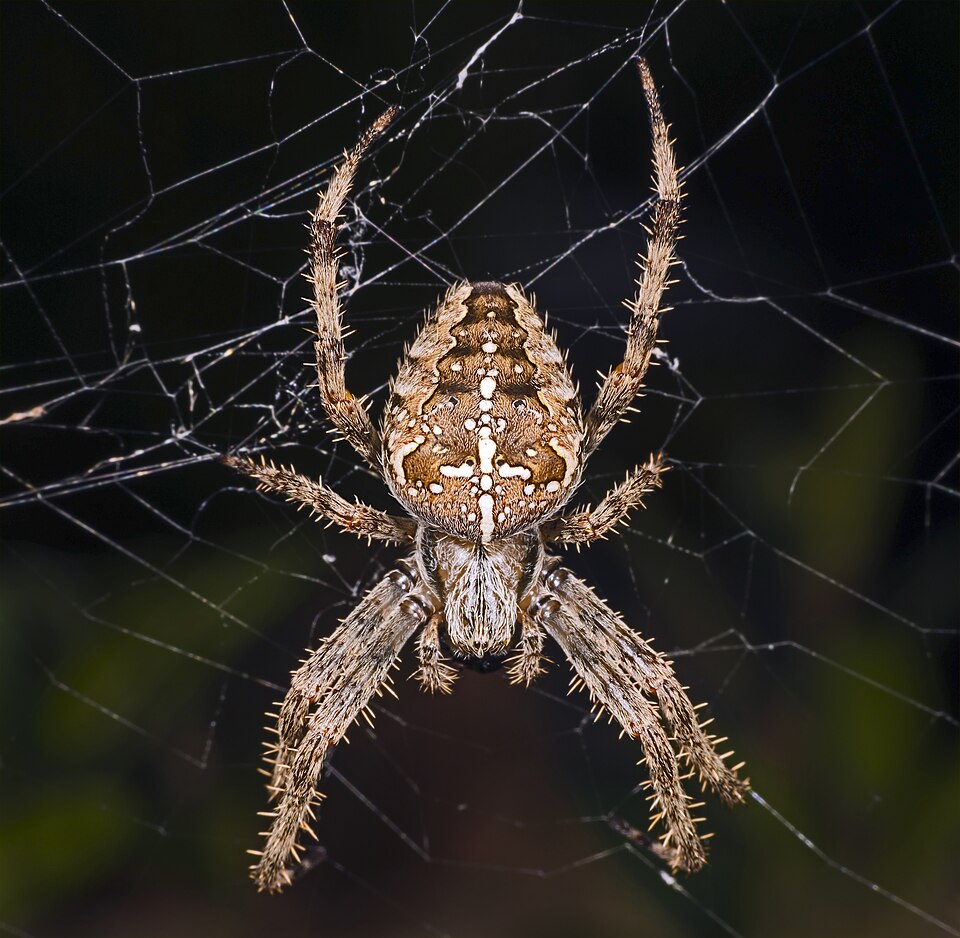
The European garden spider builds the classic round spider web you see in gardens and on fences. You can tell it by the white cross on its back. It sits in the middle of its web, head down, and waits for a fly to land.
How big is it?
How long is it?
How big is European garden spider compared to YOU?
Just maths in your browser. Nothing is saved or sent anywhere.
How fast is it?
Fun facts
It often eats its old web in the evening and builds a brand new one, which takes about an hour.
Only some threads of the web are sticky. The spider knows which ones and walks on the others.
When something big scares it, it shakes its web so fast that it turns into a blur.
Baby spiders hatch in spring and stay together in a yellow ball. If you touch it, they all run in different directions.
The white cross on its back is made of tiny spots.
Most asked questions about European garden spider
?What does a garden spider eat?
Flying insects that get stuck in its web, such as flies and wasps.
?How long does it take to build a web?
About one hour. Many garden spiders build a new web every day.
Myth buster
Myth: Spiders are insects.
Truth: They are not. Insects have six legs and spiders have eight. Spiders are arachnids, like scorpions.
For bug experts
- Scientific name
- Araneus diadematus
- Named by
- Clerck, 1757
- Group
- Spiders
- Family
- Araneidae
- Classification
- Arachnida > Araneae > Araneidae
- Lives on
- Europe, North America
- Also known as
- Cross spider, Diadem spider, Cross orb-weaver
Where the facts come from
- Araneus diadematus (Wikipedia, CC BY-SA 4.0): what it looks like, where it lives, what it eats, sizes and fun facts, retold in simple words.
- Picture by Didier Descouens. CC BY-SA 3.0, Wikimedia Commons. The round sticker of this bug is cut from the same picture.
If we got something wrong, sorry, we are bug fans, not a science journal. Tell us at [email protected] and we will fix it.
 Goliath birdeater
 Brown recluse
 Redback spider
 Yellow garden spider
 Bold jumping spider
 Spotted orb-weaver
 Black-veined white
 Fig wasp
 Wart-biter
 Jerusalem cricket
 Rusty spider wasp
 Giant resin bee