

Barbary harvester ant
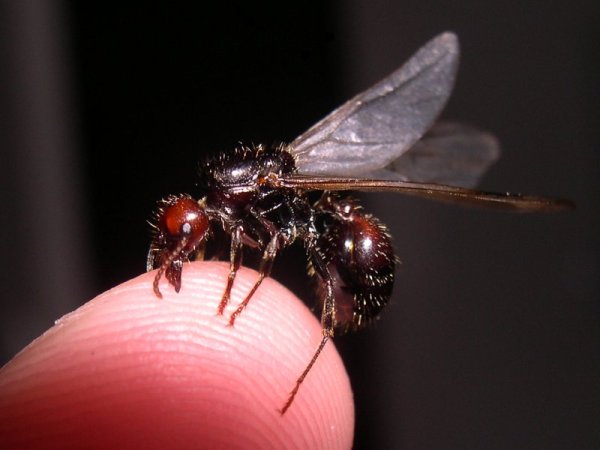
The Barbary harvester ant is an ant that collects seeds, like a tiny farmer bringing in the harvest. Long lines of ants march along their own roads to carry seeds home to the nest. Big ants, middle-sized ants and small ants all have their own jobs.
How fast is it?
Fun facts
Its ant roads can be up to 30 metres long, and they stay even when no ants are using them.
The ants leave smelly trails that tell other ants where the best seeds are.
Small ants carry small seeds and big ants carry the big ones. Sometimes they pass seeds along in a chain.
Farmers in Spain once thought these ants were stealing their seeds. Then they found out the ants actually help the fields.
Seeds lighter than 0.4 milligrams are almost never picked.
Most asked questions about Barbary harvester ant
?What does a harvester ant eat?
Seeds. It collects them in the fields and stores them in its nest.
?Where does the Barbary harvester ant live?
In southern Europe and North Africa, often in farm fields.
For bug experts
- Scientific name
- Messor barbarus
- Named by
- Linnaeus, 1767
- Group
- Ants
- Family
- Formicidae
- Classification
- Insecta > Hymenoptera > Formicidae
- Lives on
- Europe, Africa
Where the facts come from
- Messor barbarus (Wikipedia, CC BY-SA 4.0): what it looks like, where it lives, what it eats, sizes and fun facts, retold in simple words.
- Picture by Álvaro Rodríguez. CC BY-SA 2.0, Wikimedia Commons. The round sticker of this bug is cut from the same picture.
If we got something wrong, sorry, we are bug fans, not a science journal. Tell us at [email protected] and we will fix it.
 Black garden ant
 Bullet ant
 Pharaoh ant
 Argentine ant
 Red imported fire ant
 Yellow crazy ant
 Hobo spider
 Eastern tiger swallowtail
 Southern black widow
 Grape phylloxera
 Boll weevil
 Great black wasp