

Leafcutter ant
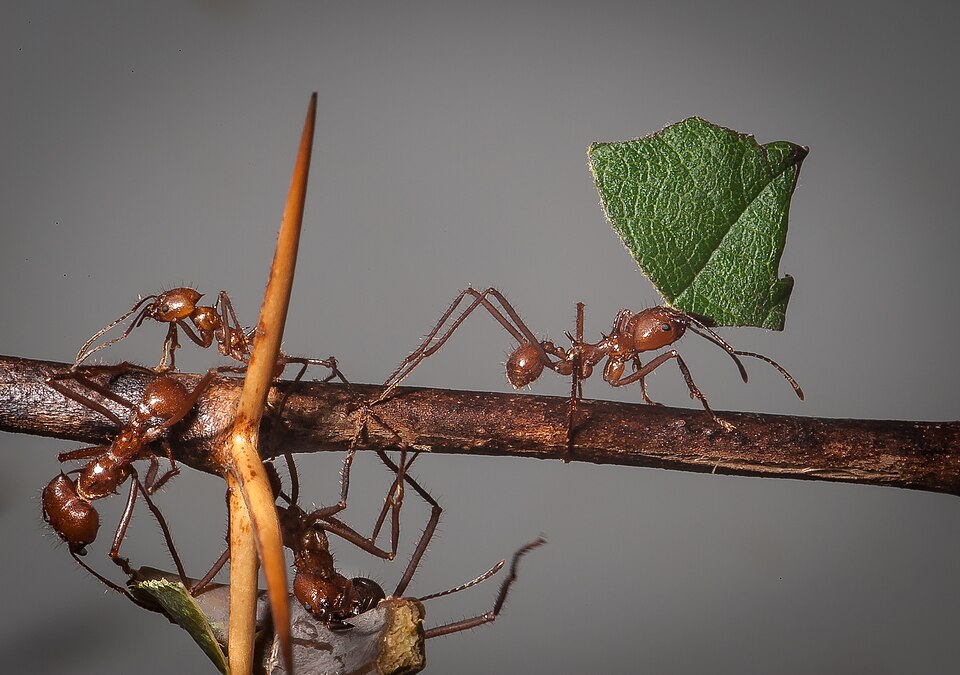
Leafcutter ants cut pieces of leaves and carry them home in long lines through the rainforest. But they do not eat the leaves. They use them to grow a special fungus in their nest, and that fungus is their food, like a little underground farm.
How fast is it?
Fun facts
One colony can have up to 5 million ants, all with one queen. The queen can live more than 20 years.
Every ant has a job. Tiny ones look after the fungus garden and babies, middle sized ones collect leaves, and the biggest ones are guards.
Tiny ants ride on the leaves the bigger ants carry, to chase away flies that want to lay eggs on them.
Their nests can go 7 metres deep, with tunnels that let fresh air blow through.
Old ants work at the colony's rubbish dump and are not allowed back into the rest of the nest.
Most asked questions about Leafcutter ant
?What do leafcutter ants eat?
They eat a fungus that they grow on the leaves they collect, not the leaves themselves.
?How many ants live in one leafcutter nest?
Up to 5 million ants can live in one colony.
For bug experts
- Scientific name
- Atta cephalotes
- Named by
- Linnaeus, 1758
- Group
- Ants
- Family
- Formicidae
- Classification
- Insecta > Hymenoptera > Formicidae
- Lives on
- North America, South America
- Also known as
- Hairy-headed leafcutter ant
Where the facts come from
- Atta cephalotes (Wikipedia, CC BY-SA 4.0): what it looks like, where it lives, what it eats, sizes and fun facts, retold in simple words.
- Picture by Pjt56. CC BY-SA 4.0, Wikimedia Commons. The round sticker of this bug is cut from the same picture.
If we got something wrong, sorry, we are bug fans, not a science journal. Tell us at [email protected] and we will fix it.
 Black garden ant
 Bullet ant
 Pharaoh ant
 Argentine ant
 Red imported fire ant
 Yellow crazy ant
 Coconut rhinoceros beetle
 Giant forest scorpion
 Superworm
 Hawaiian happy-face spider
 Giant tiger land snail
 Madagascan sunset moth