

Harlequin bug
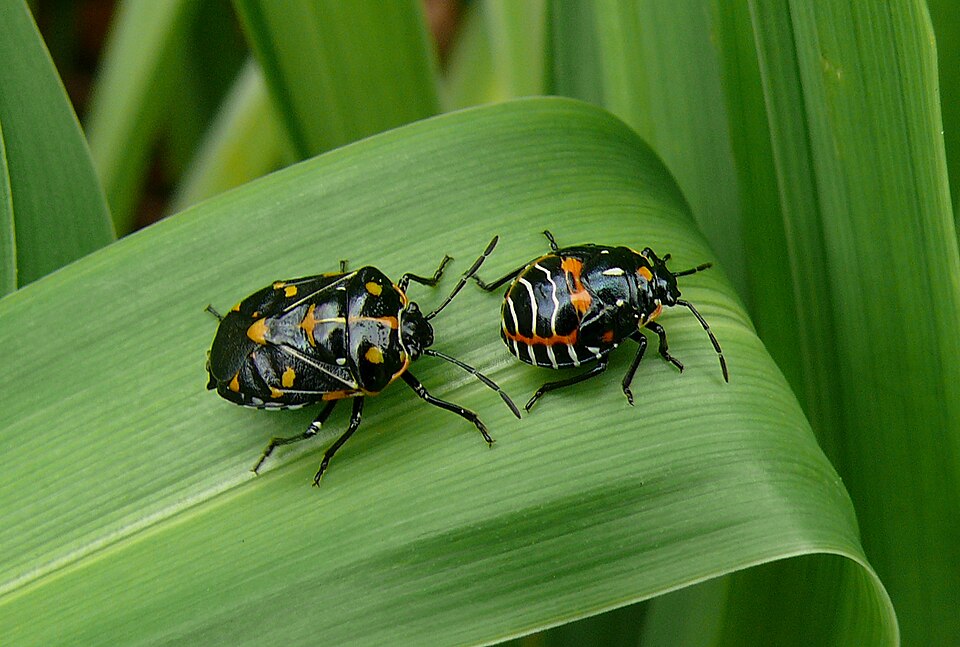
The harlequin bug is a black shield bug painted with bright red, orange, yellow and white patterns, like a clown's costume. It is a stink bug that lives on cabbage and its relatives. Its bright colours warn birds that it tastes bad.
How fast is it?
Fun facts
Cabbage plants have a sharp mustard taste. The bug stores that taste in its body, so birds find it yucky.
Its eggs look like tiny black-and-white striped barrels, laid in neat groups of twelve.
In warm places there can be up to six families of bugs in one year.
In colder places the grown-ups spend the winter hiding in old plants at the edge of fields.
Most asked questions about Harlequin bug
?Is the harlequin bug harmful?
Not to people. It is a pest for gardeners because it sucks the juice out of cabbage plants.
?What does the harlequin bug eat?
It sucks juice from cabbage, broccoli, kale, radish, mustard and similar plants.
?Why is it so colourful?
Its bright colours warn birds that it tastes bad.
For bug experts
- Scientific name
- Murgantia histrionica
- Group
- True bugs and cicadas
- Family
- Pentatomidae
- Classification
- Insecta > Hemiptera > Pentatomidae
- Lives on
- North America
- Also known as
- Harlequin cabbage bug, Calico bug, Fire bug
Where the facts come from
- Harlequin cabbage bug (Wikipedia, CC BY-SA 4.0): what it looks like, where it lives, what it eats, sizes and fun facts, retold in simple words.
- Picture by Linda Tanner. CC BY 2.0, Wikimedia Commons. The round sticker of this bug is cut from the same picture.
If we got something wrong, sorry, we are bug fans, not a science journal. Tell us at [email protected] and we will fix it.
 Pharaoh cicada
 Spotted lanternfly
 Brown marmorated stink bug
 Cochineal
 Boxelder bug
 Western conifer seed bug
 Mammoth wasp
 Red milkweed beetle
 Purseweb spider
 Vampire moth
 Blue-banded bee
 Corn earworm