

Giant red velvet mite
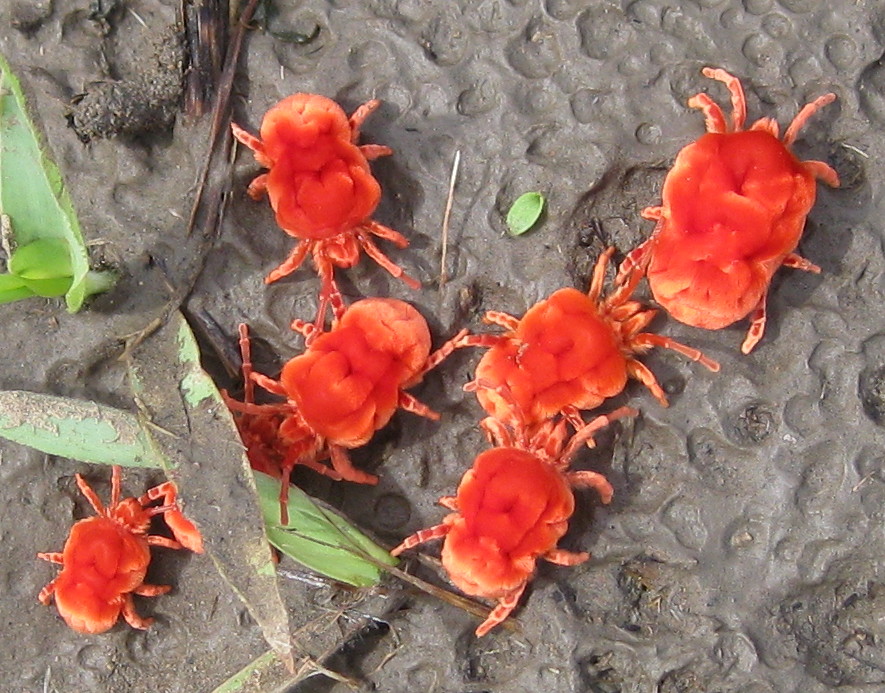
The giant red velvet mite is a bright red, fuzzy little creature that looks like a tiny cushion of red velvet. It has eight legs, like its spider cousins. Most of the time it hides underground, but after heavy rain lots of them pop out at once.
How fast is it?
Fun facts
It is covered in fine hairs, which makes it look and feel like velvet.
Its bright red colour warns animals that it tastes and smells bad.
One African kind grows up to about 14 millimetres long, which makes it one of the biggest mites in the world.
It spends most of its life in soil or sand and comes up after big rains.
Most asked questions about Giant red velvet mite
?Is the red velvet mite dangerous?
No. It is harmless to people and eats pests.
?Is a red velvet mite a spider?
No, but it is a cousin of spiders. Like them, it has eight legs.
?Why do red velvet mites appear after rain?
They spend most of their time underground and come out in large numbers after heavy rain.
For bug experts
- Scientific name
- Dinothrombium
- Group
- Scorpions, ticks and friends
- Family
- Trombidiidae
- Classification
- Arachnida > Trombidiformes > Trombidiidae
- Lives on
- Europe, Asia, Africa, North America, South America, Australia and Oceania
- Also known as
- Red velvet mite
Where the facts come from
- Dinothrombium (Wikipedia, CC BY-SA 4.0): what it looks like, where it lives, what it eats, sizes and fun facts, retold in simple words.
- Picture by Ton Rulkens from Mozambique. CC BY-SA 2.0, Wikimedia Commons. The round sticker of this bug is cut from the same picture.
If we got something wrong, sorry, we are bug fans, not a science journal. Tell us at [email protected] and we will fix it.
 Emperor scorpion
 Lone star tick
 Deathstalker
 Itch mite
 Eyelash mite
 Deer tick
 Plain tiger
 Mexican redrump tarantula
 Dawson's burrowing bee
 Socotra Island blue baboon tarantula
 Master blister beetle
 Desertas wolf spider
.jpg)