

Copper chafer
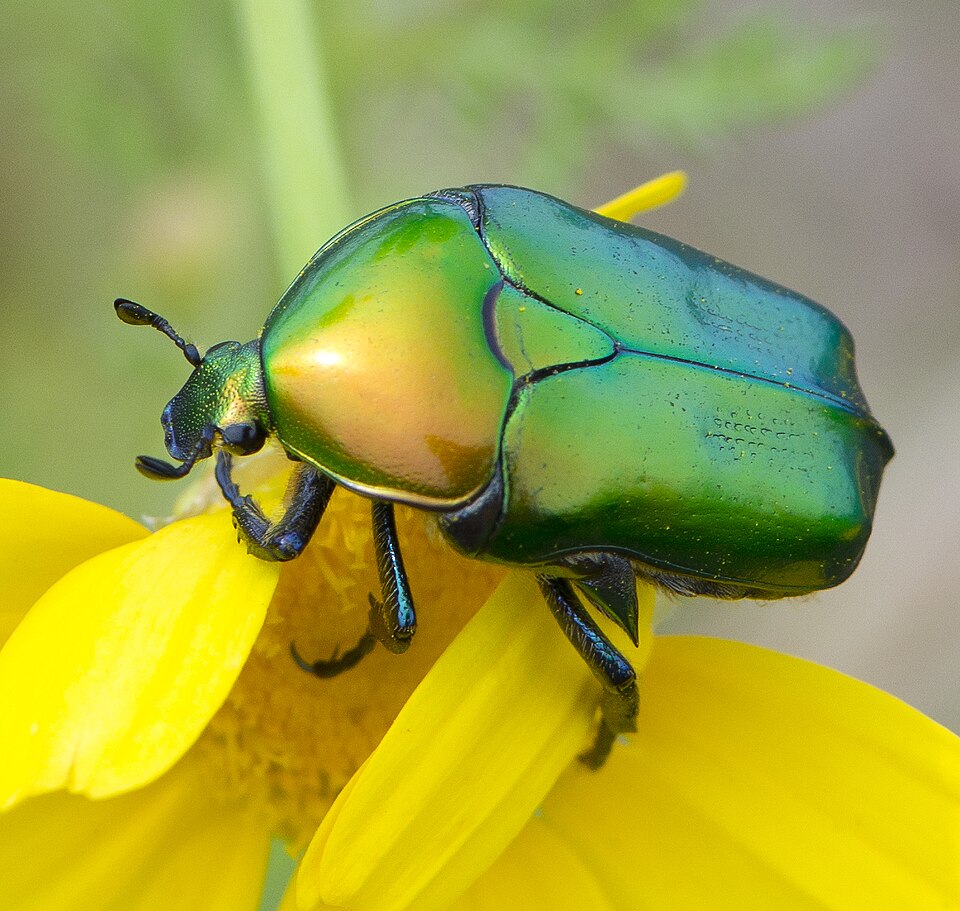
The copper chafer is a shiny metallic beetle that glitters in the sun. It is a really good flier and can land on a flower with great aim. You often see it sitting in flowers, munching pollen.
How fast is it?
Fun facts
Eating fruit gives it lots of energy, so it can fly further in summer.
The mother lays her eggs in compost, dung or rotting wood, where the larvae find plenty to eat.
Its larvae are sometimes found in compost heaps or even living with ants.
It can live anywhere from the seashore up to 2000 metres high in the mountains.
It usually takes about one year to grow from egg to adult.
Most asked questions about Copper chafer
?Is the copper chafer dangerous?
No. It is harmless and does not bite or sting.
?What does the copper chafer eat?
Pollen from flowers, ripe fruit and tree sap. Its larvae eat rotting wood.
?Where can I find a copper chafer?
On flowers and fruit trees in sunny places across Europe and Asia.
For bug experts
- Scientific name
- Protaetia cuprea
- Group
- Beetles
- Family
- Scarabaeidae
- Classification
- Insecta > Coleoptera > Scarabaeidae
- Lives on
- Europe, Asia, Africa
- Also known as
- Rose chafer
Where the facts come from
- Protaetia cuprea (Wikipedia, CC BY-SA 4.0): what it looks like, where it lives, what it eats, sizes and fun facts, retold in simple words.
- Picture by Dr. Zachi Evenor צחי אבנור. CC BY-SA 4.0, Wikimedia Commons. The round sticker of this bug is cut from the same picture.
If we got something wrong, sorry, we are bug fans, not a science journal. Tell us at [email protected] and we will fix it.
 Stag beetle
 Hercules beetle
 Common glow-worm
 Goliath beetle
 Cockchafer
 Mealworm beetle
 Holly blue
 Small tortoiseshell
 Western tiger swallowtail
 Vapourer moth
 Dark giant horsefly
 Orchard spider