

Cigarette beetle
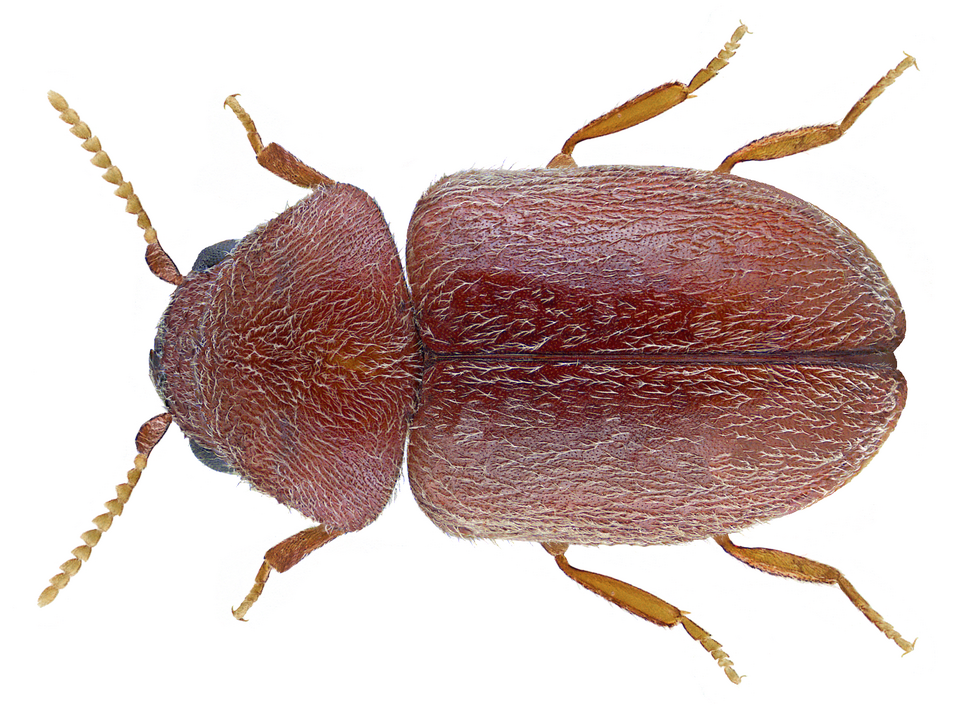
The cigarette beetle is a tiny dark brown beetle, only 2 or 3 millimetres long. It sneaks into kitchen cupboards and storerooms and eats dry food. It got its name because it is one of the very few insects that can eat dried tobacco.
How big is it?
How long is it?
How big is Cigarette beetle compared to YOU?
Just maths in your browser. Nothing is saved or sent anywhere.
How fast is it?
Fun facts
Tobacco contains nicotine, which is poison for most insects, but the cigarette beetle can live in it.
It eats more kinds of stored food than almost any other pantry insect.
It grows best in flour. Cayenne pepper and paprika make it heaviest and help it live longest.
It is a strong flier and can fly from one food store to the next.
Its eggs only hatch when it is between 15 and 40 degrees warm, so it likes hot places best.
Most asked questions about Cigarette beetle
?How did cigarette beetles get in my kitchen?
They usually come in with dry food from the shop, like flour or spices, and can also fly in.
?Are cigarette beetles harmful?
They do not hurt people, but they spoil dry foods like flour, cereal and spices.
?How big is a cigarette beetle?
Only about 2 to 3 millimetres long, smaller than a grain of rice.
Myth buster
Myth: The cigarette beetle only eats cigarettes and tobacco.
Truth: No. It eats lots of dry foods, like flour, rice, spices and cereal. Tobacco is actually one of its worst foods.
For bug experts
- Scientific name
- Lasioderma serricorne
- Group
- Beetles
- Family
- Ptinidae
- Classification
- Insecta > Coleoptera > Ptinidae
- Lives on
- Europe, Asia, Africa, North America, South America, Australia and Oceania
- Also known as
- Cigar beetle, Tobacco beetle, Paprika beetle, Tow bug
Where the facts come from
- Lasioderma serricorne (Wikipedia, CC BY-SA 4.0): what it looks like, where it lives, what it eats, sizes and fun facts, retold in simple words.
- Picture by Udo Schmidt from Deutschland. CC BY-SA 2.0, Wikimedia Commons. The round sticker of this bug is cut from the same picture.
If we got something wrong, sorry, we are bug fans, not a science journal. Tell us at [email protected] and we will fix it.
 Stag beetle
 Hercules beetle
 Common glow-worm
 Goliath beetle
 Cockchafer
 Mealworm beetle
 Ghost ant
 Eastern carpenter bee
 Brown dog tick
 Guinea paper wasp
 Australian hornet
 European cave spider
_(28701262892).png)