

Brazilian treehopper
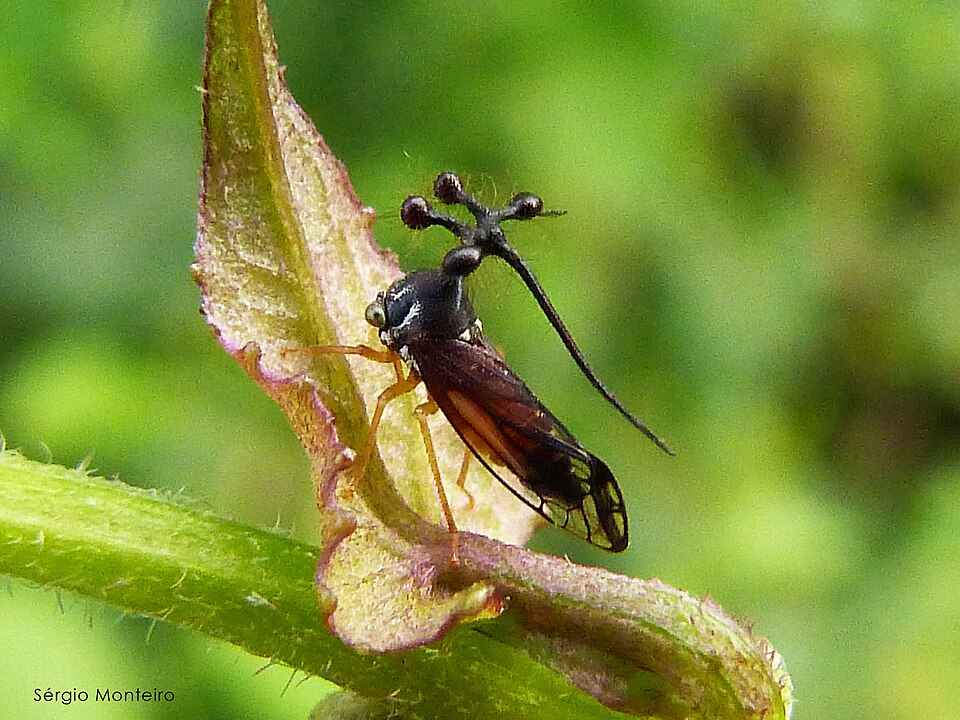
The Brazilian treehopper is a tiny bug with a very strange hat. Little balls on sticks grow up from its back, like a helicopter or a funny antenna. Nobody knows for sure what they are for.
How fast is it?
Fun facts
Scientists think the funny balls on its back may scare away hungry animals or make it hard to eat.
It does not move around much and spends a lot of time on the underside of leaves.
The mother often lays her eggs right inside the plant.
Its babies look like small grown-ups and just grow bigger each time they shed their skin. They do not turn into a pupa.
Most asked questions about Brazilian treehopper
?What are the balls on the Brazilian treehopper?
They are hairy little balls growing from its back. Scientists think they may help protect it from enemies.
?What does the Brazilian treehopper eat?
It drinks sap from plants, often from the underside of leaves.
?Is the Brazilian treehopper dangerous?
No, it is tiny and harmless.
For bug experts
- Scientific name
- Bocydium globulare
- Group
- True bugs and cicadas
- Family
- Membracidae
- Classification
- Insecta > Hemiptera > Membracidae
- Lives on
- South America
Where the facts come from
- Bocydium globulare (Wikipedia, CC BY-SA 4.0): what it looks like, where it lives, what it eats, sizes and fun facts, retold in simple words.
- Picture by Sérgio Monteiro. Public domain, Wikimedia Commons. The round sticker of this bug is cut from the same picture.
If we got something wrong, sorry, we are bug fans, not a science journal. Tell us at [email protected] and we will fix it.
 Pharaoh cicada
 Spotted lanternfly
 Brown marmorated stink bug
 Cochineal
 Boxelder bug
 Western conifer seed bug
 Emerald swallowtail
 Harlequin beetle
 Kauai cave wolf spider
 Great Mormon
 Giant rainforest mantis
 Paper kite butterfly