

Wild silk moth
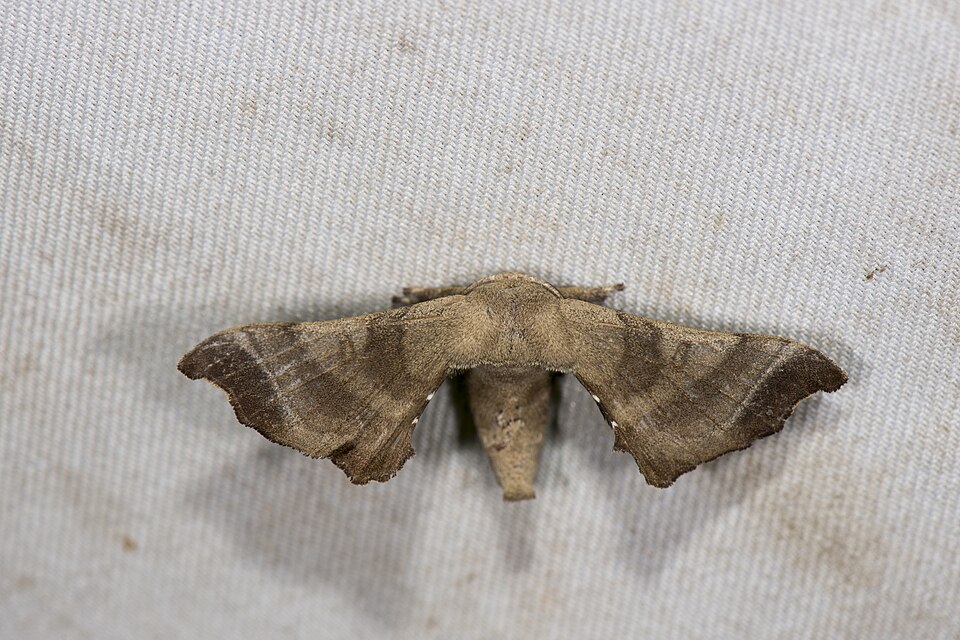
The wild silk moth is a plain greyish brown moth from East Asia. It is the closest wild cousin of the silkworm moth that people have kept for thousands of years to make silk. Its caterpillar is also called a silkworm and spins a silk cocoon.
How fast is it?
Fun facts
People think all pet silkworms come from wild silk moths collected in China maybe 5,000 years ago.
Unlike the tame silk moth, the wild one can still fly and live on its own in nature.
Wild males sometimes fly to tame silk moth females, and they can have babies together.
The wild moth is slimmer and darker than the tame one, which is creamy white and chubby.
Most asked questions about Wild silk moth
?What is the difference between a wild silk moth and a silkworm moth?
The wild one can fly and live in nature. The tame silkworm moth cannot fly and needs people to survive.
?Where does the wild silk moth live?
In East Asia, from inland China to Korea and Japan.
?Does the wild silk moth make silk?
Yes. Its caterpillar spins a silk cocoon, just like its tame cousin.
For bug experts
- Scientific name
- Bombyx mandarina
- Group
- Moths
- Family
- Bombycidae
- Classification
- Insecta > Lepidoptera > Bombycidae
- Lives on
- Asia
Where the facts come from
- Bombyx mandarina (Wikipedia, CC BY-SA 4.0): what it looks like, where it lives, what it eats, sizes and fun facts, retold in simple words.
- Picture by LiCheng Shih. CC BY 2.0, Wikimedia Commons. The round sticker of this bug is cut from the same picture.
If we got something wrong, sorry, we are bug fans, not a science journal. Tell us at [email protected] and we will fix it.
 Atlas moth
 Luna moth
 Hummingbird hawk-moth
 Domestic silk moth
 Isabella tiger moth
 Polyphemus moth
 Peacock tarantula
 Pipevine swallowtail
 Eastern Hercules beetle
 Spicebush swallowtail
 New Zealand glowworm
 Yellow-spotted millipede
.jpg)