

Fall webworm
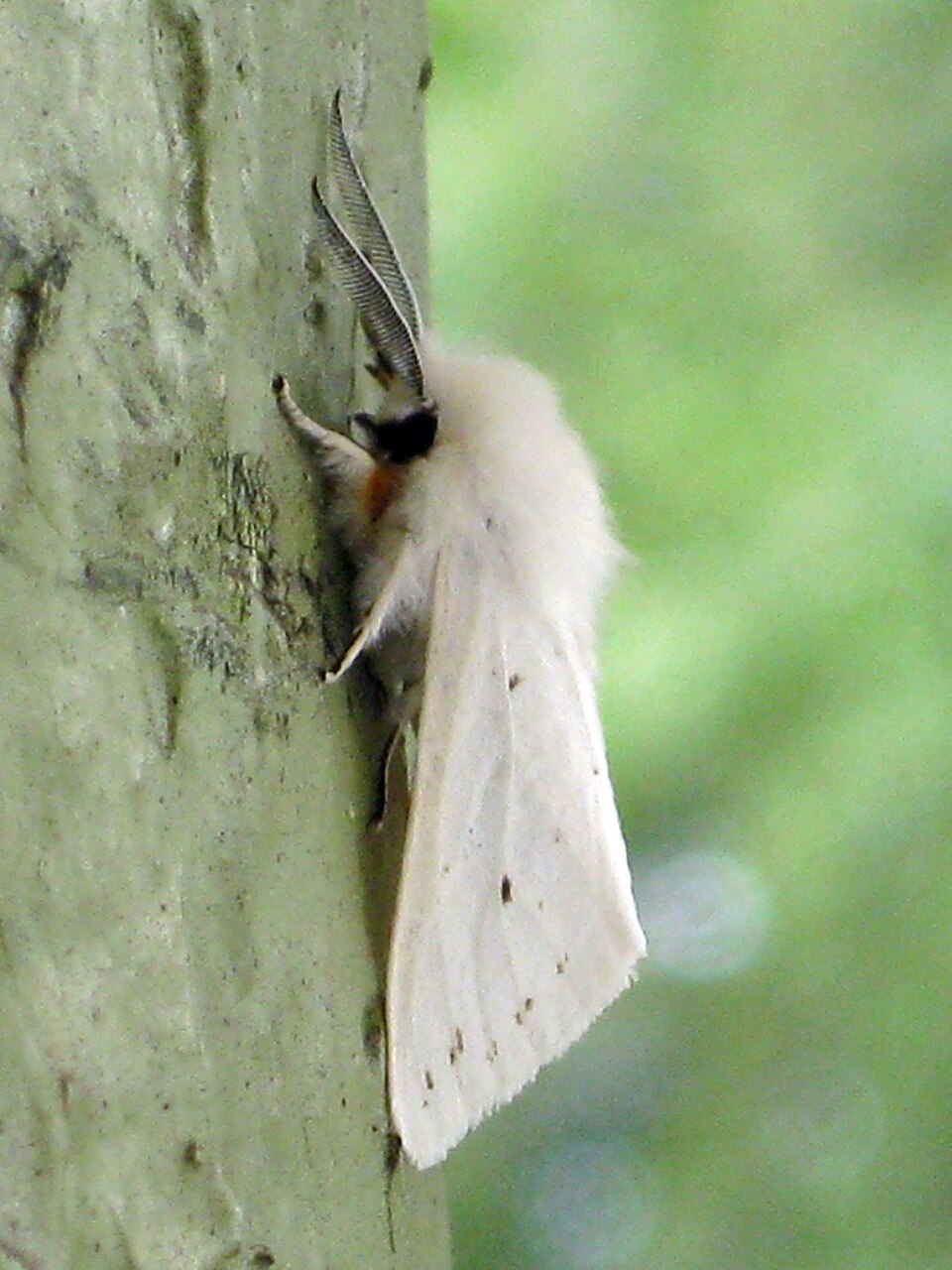
The fall webworm is a fluffy white moth, but it is famous for its caterpillars. In late summer they spin big messy silk tents at the tips of tree branches. Hundreds of hairy caterpillars live and eat together inside.
How big is it?
How wide are its wings?
How big is Fall webworm compared to YOU?
Just maths in your browser. Nothing is saved or sent anywhere.
How fast is it?
Fun facts
The caterpillars wiggle all together at the same moment, like a dance. Nobody knows exactly how they keep in time.
The mother moth covers her eggs with hairs from her own tummy to protect them.
The silk tent keeps the caterpillars warm, helps them grow faster and hides them from hungry birds.
It came from North America and travelled to Europe and Japan in the 1940s.
It spends the winter as a dark brown pupa in a thin silk cocoon, hidden in bark and fallen leaves.
Most asked questions about Fall webworm
?Do fall webworms kill trees?
No. They can eat a lot of leaves, but a healthy tree grows them back.
?What does the fall webworm moth look like?
It is a small hairy moth, mostly white, sometimes with dark spots, and its front legs have yellow or orange patches.
?What do fall webworms eat?
The caterpillars eat the leaves of many trees, like walnut, elm, hickory, maple and fruit trees.
For bug experts
- Scientific name
- Hyphantria cunea
- Group
- Moths
- Family
- Erebidae
- Classification
- Insecta > Lepidoptera > Erebidae
- Lives on
- North America, Europe, Asia
Where the facts come from
- Fall webworm (Wikipedia, CC BY-SA 4.0): what it looks like, where it lives, what it eats, sizes and fun facts, retold in simple words.
- Picture by TampAGS , for AGS Media. CC BY-SA 3.0, Wikimedia Commons. The round sticker of this bug is cut from the same picture.
If we got something wrong, sorry, we are bug fans, not a science journal. Tell us at [email protected] and we will fix it.
 Atlas moth
 Luna moth
 Hummingbird hawk-moth
 Domestic silk moth
 Isabella tiger moth
 Polyphemus moth
 Great golden digger wasp
 Small tortoiseshell
 Western tiger swallowtail
 Armoured ground cricket
 King baboon spider
 Grapevine beetle